Friday, September 14, 2012

iPhone 5: what it is and how it affects the world at large

Ah, so the cat is out of the bag. iPhone 5 is upon us; it will be available in stores worldwide over the next couple of months. Let's go briefly over how things went at Apple's event to announce the 5.

Most people say it lacked pomp and chutzpah. I also came away thinking the same, but after sleeping over it, I came to a new realization. The event was dull because it lacked Apple's reality distortion field. It conveyed features for what they were, not making hyperbolic statements or promises.

Secondly, and most importantly, Apple did not have anything even superficially jaw-dropping to announce. In fact, some of the 'features' came straight out of a comedian's portfolio. So what do you do with a 4-inch screen? You'd think it would be better for web browsing etc. But no, Apple says you CAN ADD A FIFTH ROW OF ICONS to its desktop!

The 'new' additions to Siri, meanwhile, are an exact copy of what Google announced with Jelly Bean's Google Now feature. Two months ago.

The camera remains largely the same. Yeah, there's a panorama mode. As if its the first. The rest? Aluminum construction. Yay. Thin. Double-yay. And hey, now you can get location updates within apps. So useful for the three people who like to text while navigating in their cars.  There's 4G/LTE too, though about a thousand phones on the market have it right now.

Having been through the revolutionary changes, let's see what stays the same:
1) Design of the hardware
2) Design of the user interface
3) Camera resolution
4) Pixel density of the display

So that was that, a summary of Apple's most boring event in years. Oh, that is, for the Apple fans. For everyone else (THE THINKING MAJORITY) it was a study in a company undoing itself right before the world stage. Having reached some sort of commercial apex, Apple seems content to rest on its laurels. It is just adding minor variations to the OS while retaining the same aesthetics for the hardware and software design. In other words, Apple is behaving EXACTLY like Nokia, 4 years ago.

There are naysayers. Some say it is wrong to expect something groundbreaking from Apple. Hello? Since when? How did that materialize, since Apple itself claims every new feature as a revolution? This is the most despicable example of the pathetic sold-out mentality prevailing within the tech journalism circles. Hype up a new Apple device to high heaven, then try to justify it when it doesn't deliver.
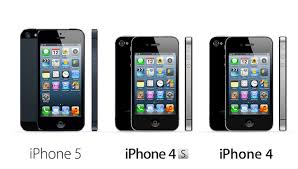


How is that innovation?

Thursday, September 6, 2012

World's First iPhone 5 Review

Hey y'all.


Today I have the scoop of the century, if not millennium. Tired by my continuous jabs at their products, Apple staff abducted me yesterday and took me to their flying-saucer-shaped headquarters. There, I was seated in a blank room. A ghostly apparition, perhaps a 3D projection of Steve Jobs, sat before me and look very angry; there were red flashes in his eyes. He placed an object before me and intoned: "This is the iPhone 5. Bow before it, kiss my feet, and then review it. Failing that, you will be abducted again and never heard from."

Trembling, I took the phone in my hands; I stared at it reverently, knowing fully well that only Steve's ghost and I had touched the finished product in the entire world. Here's my review.

LOOKS

The iPhone 5 looks nothing like any other phone on the planet. It is made of a sturdy polycarbonate, is very flat and therefore will survive falls easily, even from thousands of feet, since it will then float harmlessly to the ground. Strike one for Apple there: the first phone in history to achieve this feat: the world's first truly drop-proof phone.

The phone's front fascia is dominated by a grid of numbered plastic squares. iPhone has been touch-only in the past, but users have been crying out for more tactile interaction with the phone. Therefore, Apple, as always attentive to its customers' needs, invented a neat solution: little plastic squares are mounted onto springs; they have contact points which, when connected to the circuit board below, send appropriate signal to the CPU and it displays a number or an alphabet on the screen. Apple has named this technology 'iType' and of course, being a world first, it is patented. There are already rumours in the market that many computer and phone manufacturers are scrambling to discard an imitation of this solution, which they called 'keyboard' or 'keypad', and come up with an alternative. Judge Lucy Koh has cancelled her vacations in anticipation.

On top of the iType surface is a little white screen with 18:9 aspect ratio for ideal multimedia playback. The screen diagonal is 3.5 inches and features an advanced technology called 'LCD'.

On top left there is a huge speaker slot. Apple thinks that today's mobile phones suffer from poor voice quality and have therefore increased the size of the speaker to 2 square centimeters to enable users to better listen to calls. This speaker grill size and design has also been patented under the name 'iHear' patent violation notices have been sent to every electronics manufacturer on Earth and beyond. There is also a solar panel to complement the existing battery ("iCharge") and that will ensure a battery life of a week under heavy usage.

There are little design flourishes all over. The Apple logo, for example, is there in the very shape of the phone, saving precious space and weight of previous solutions where embossing was required. The iPhone 5 will be available in all colours corresponding to the rainbow from day one, all the better for its target demographic. The phone is only 3.5 mm in thickness, therefore taking the title of thinnest phone ever made. The Apple shape makes the experiencing of holding and using a phone a joy.

The rest about the innards of the phone is a mystery. I did learn that thanks to the smaller display, the processor chosen is a single-core 337 MHz job. I am confident that the iPhone 5 will perform even faster than its predecessor.


DIALING, CONTACTS, PIM

As expected, the phone dialing experience on iType is second to none. The squares click and there is a hitherto unseen tactility and clarity to the whole experience. There is no T9 or alphabetical dialing since that solution has been in use for many years and has caused countless mis-dialing incidents. To protect user's privacy, Apple has opted not to build an address book in the phone and instead, every iPhone will come with the elegant binder (pictured) called 'iNote' which will clip neatly to the phone itself. The binder will be used to store contacts and other information by users. Providing endless flexibility, iNote is a pioneering technology allowing its users to write or draw virtually anything, maintain a calendar, jot down engineering plans, song lyrics, friends' birthdays, recipes, etc, while keeping the content perfectly secure and within easy reach.


The back camera has a special mode called 'iNote mode' where it will photograph content on the iNote pad and act accordingly. For example, if it's a telephone number, it will dial that number, requiring precisely one key push from users. If it's a drawing, it will scan it and keep it on display for 30 minutes, so that you can share it with others; naturally, all other functions will be disabled for the duration to save users from complications.

This kind of out-of-the-box thinking is what sets Apple apart from competitors. Hands down, this is the most secure way of storing information.

The purpose of some keys marked as +,-,X,/ and MR, M-, M+ was not immediately apparent. According to Apple representative, these represent another pioneering technology. The sign keys are for quick calculations, while MR, M- etc are for storing any picture taken by the camera, deleting it or recalling a previous one.

To further bolster the security and provide users with bulletproof peace of mind, incoming calls as well as SMS service, have been disabled. It is possible to send a message via iNote though. Apple says that 90% of iPhone 5 customers will still have iPhone 4 or 4S, and they will continue to function even after introduction of iPhone 5. By disabling incoming calls or messages, iPhone 5 will remain a bulletproof platform while previous phones will find themselves useful as well. It's a win-win situation.

INTERNET AND MULTIMEDIA

Apple introduces a new internet portal called Siri.com. To browse the net, you will simply have to recite the entire URL into the phone's mic and the website will appear on the screen. This will prevent mis-typed addresses and provide users with a truly hands-off experience. Needless to say, web browsing is fully integrated with iNote.

Apple's Safari version for iPhone 5 reaches new levels of security and reliability. This browser rids itself of unnecessary clutter like Flash, HTML, and images. Instead, it presents web pages in a supremely attractive text-only form, truly outstanding on the white LCD. Pages load instantly, and since iPhone 5 foregoes wifi owing to its fickle and insecure nature, the uncluttered web can travel even faster on the provided GPRS connection.

Continuing with tradition, there is no dedicated memory slot. There is a proprietary 47-pin port though, which will accept a wireless transmitter (sold separately), to stream content from a nearby PC or phone. Thus, weight has again been saved by foregoing internal memory.

The camera is carried over from iPhone 4S, which means it is the best on the market. Any pictures you take will appear instantly on the LCD, and to enhance smoothness during editing, they are 8-bit monochrome only. You can always upload the pics taken by camera, in full colour, to any website via the built in GPRS connection.

The iPhone 5 also excels when it comes to music and movies. In a survey, users found the black bars interrupting the movie frame as the biggest irritant. Therefore, iPhone 5's screen has an aspect ratio of 18:9, and needless to say, Movies play perfectly. 8-bit monochrome LCD ensures that, unenamored with the burden of colour or detail, they retain a record-breaking 60 frames per second.

CONCLUSION

I had the previlege of only a brief time with the iPhone 5. However, even so, I was able to conclude that iPhone 5 is the most advanced and user-friendly gadget ever to be released. It has unprecedented security and user friendliness. It beats anything by Samsung or Sony or Nokia. It is a revolution ten times as big as the original iPhone was in 2007. Apple has once again delivered a stunning device that is second to none on the market.

The release price has been revised slightly upward to $1000. This was kept to take the confusion out of making the purchase: most Apple users, according to studies conducted by Apple, only recognize banknote designations 500 or higher. Not having to count the money at an Apple store is a great incentive to buy an iProduct, and once again it proves that Apple places user experience as its top prority.  I believe it is a small price to pay for what is essentially a world-changing device. 

Wednesday, September 5, 2012

Deadly Sins of Gadget Buyers: The Mistakes We Make

Whew. My last post about Apple's litigations and their real motive attracted a lot of attention. I am grateful to my readers and hope they will keep coming back for more.

Today let me invite your attention to a few crucial mistakes we all buy while buying gadgets, which allow manufacturers to rip us off and make fools out of us. While I may be overwhelmingly in favour of Android phones, I nevertheless know that every manufacturer is out to make money, and preferably, more money than deserved. Here I list down some key mistakes gadget buyers (including myself) make.

1) Going for 'specs' rather than 'experience'

Granted, in most cases the two are tied. For example, a web browsing experience on a 720p 4.7 inch screen will be superior to that on a 4 inch 480p screen, owing to both size and resolution. Also, you absolutely WANT 1 GB of RAM if you hope to keep your Android set chugging along.

But from here on it gets crazy. Quad core processors? Who needs them with Jelly Bean? Samsung Nexus S, an almost antiquated set, runs just fine on JB. Same goes for Galaxy Nexus, which is beating those newfangled Galaxy S3s at the speed game. You need latest SOFTWARE, not hardware.

2) Camera

Trust me, even a cellphone costing 500 USD cannot better the photo quality offered by a cheap point and shoot camera costing 1/5th the price. Even if the megapixel count goes up to 12 or 16, they are still there on that tiny sensor which cannot make sense of most things in the world. Same goes for video: most smartphone cameras these days will happily make an HD video but they cannot match the smoothness and light range of a dedicated camera.

So bear in mind: you just need to pay for a PASSABLE camera on a cellphone, even if it is 3.2 megapixels. Anything over that is overkill.

3) Ignoring perfectly good products for one missing feature

We do this a lot. We have a feature in mind, and for that feature we are willing to pay more. We ignore perfectly good gadgets for trivial factors. So an HDTV has only one HDMI slot. So what? You can switch cables around can't you? Is it worth paying 20% more for the one with 3 slots but same picture?

Similarly some digital cameras cannot output to an HDTV. Again, there is no sense in paying more for this feature since most HDTVs these have USB slots and you can play any content on them.

Which brings me to the biggie: Smart TVs. I will cover this in a separate feature, but suffice it to say that it is one of the greatest ploy to grab more money from consumers.

So THINK. If you NEED to have a TV out connection on your phone, you must be using it very often. If you aren't likely to use it for months, no sense. The age of good Nokia phones where several features and technology was thrown in to see what lasted and what didn't, is long gone. These days you can't just say 'Yeah, but it's nice to have just in case' because you are paying for it dearly.

4) Gadget envy

Many people buy gadgets because their friends or bosses have them. Again, I would say, THINK. You want an HD monitor, right? Do you really need one with 27 inches diagonal? Won't a 22-incher suffice? Similarly, everyone at a mall having the iPhone does NOT mean it's a good phone. Democracy's underlying assumption that majority is always right, does not stand up to testimony and never was this truer.


5) Not waiting

In many third world markets, gadgets are often priced at what a buyer is willing to pay. When a particularly hot or popular gadget launches, the dealers make a lot of money, capitalizing on the buyer frenzy.

My advice is simple: WAIT. You don't absolutely need to have that new phone, TV, laptop etc, on day one. Wait for it to OFFICIALLY launched by authorized dealers. If it is not likely to, wait at least 6-8 weeks. Invariably, prices of new gadgets come down with time, and in case of cellphones, they plummet to 60 or 70% of the launch pricing. Remember: it's nothing if you flaunt the PRICE of your gadget - the only thing you can safely show off if you get good value out of it

Waiting has another advantage: you will be able to read thorough reviews of the gadget and know all about its flaws (there are many, believe it or not). Many features simply don't work, or refuse to work in specific situations. Mostly, internet FORUMS rather than reviews are a good source of this crucial information. Much of it might be misleading or very specific, but it is nevertheless useful.


These were a few mistakes that buyers make while buying gadgets. I will be back with more as I make them!


Wednesday, August 29, 2012

The Great Game Behind Apple/Samsung Verdict: Racism and Eliticism


Spot at least six differences between panels. If you can't, congratulations: you are a US judge!

This is not one of my usual articles. If you are expecting an objective analysis of the Apple/Samsung verdict, please look elsewhere. Objectivity in this case is not required or even welcome. This is a highly personal, opinionated account of my thoughts on the Apple copyright suit, its process and its implications in the long run.

As you know, Apple filed a lawsuit against Samsung, alleging that the latter stole several "patented" design ideas of its products, specifically phones and tablets. They contended that the similarities were enough to cause confusion among consumers, who might pick up a Samsung device thinking it was an Apple device. These patents covered everything from overall design of a device, to the software features, to the design of icons, etc. You can get the details from any tech blog. The summary of the situation is that none of the claimed 'patents' were actually invented by Apple. However they were awarded to them.

The suit was litigated. From the outset Judge Lucy Koh let it be known loud and clear through her remarks that she was not going to be objective or logical. The patents covered 26 devices by Samsung. At the end of arguments, a lengthy form was given to jurors, who were supposed to decide on patent violation by each of the 26 devices individually. It was estimated that it would take weeks for them to fill it out and arrive at a decision.

Surprise, surprise: the jurors were back after two days, holding Samsung guilty of all charges and slapping a penalty of $1.05 billion on them. Naturally, Samsung plans to go into appeal. However, I don't believe for a second that any US court will EVER side with a Korean company against one of their own.

Now, I am the first one to admit that I have always mocked Samsung's TouchWiz interface for its Android devices as 'iOS for kids'. Their icons are similar; but, you know what: Android is completely different to iOS. Therefore the resemblance is entirely superficial, and any consumer can easily distinguish between Samsung and Apple products simply by seeing the logos. It's not the same situation as "NOKLA" replica phones, which are so close to the real thing that it is genuinely possible for anyone to be fooled.

Therefore, to claim that Apple deserves $1 billion from Samsung thanks to lost sales is not only ridiculous, it is shamefully insulting to human intelligence. It is like Rolls Royce claiming patent infringement by BMW for copying its 'design' of a car with four wheels, four doors, two headlights and a steering. Further, according to the verdict, a Rolls Royce customer is capable of walking into a BMW dealership thinking it was a RR dealership, buying the car and going home. Suppose the chap's wife says, "I thought you went to buy a Rolls Royce". The said chap: "D'oh! I didn't see the logos! What a fool I am!"

Are we all that stupid? In the putrid, fetid minds of the Apple-bankrolled judge and jury, we are. I, however, believe that this fiasco is just a tree in a large forest, and we should be able to see the forest. Here it comes.

To me, this decision reinforces a worldwide racist/elitist agenda against third world and non-white races. Yes, you read that right. You see, a win for Apple means that Apple is allowed to slowly strangle other mobile manufacturers out of existence. It also means that competitors have to remove useful features from future devices just because Apple thinks it owns them. Granted, the decision covers the US market only and elsewhere similar suits have been thrown out. But US is a big market and no manufacturer can hope to remain successful in the long run without having a meaningful presence there.

Compare Apple and Samsung. Apple commands an uncompromised mindshare amongst the world's elite: bankers, executives, billionaires, and rich offspring of them. The pricing of Apple products ensures that they sell by the millions, yet do not reach the masses. Apples' application ecosystem is also closed and expensive. You have to be seriously rich if you mean to take full benefit of Apple products. It is like having to pay extra for 'diet' version of your favorite ice cream: you are paying more to get less. This strategy is successful because there is a whole section of general public which cannot be persuaded to invest a little time and effort into their technology. They want things as simple as they want, even if they are missing features. In return, they want a visibly expensive hardware so that they can flaunt it and announce their status. What the device can or cannot do is of absolutely no concern to them.

All credit to Steve Jobs for identifying this segment of the market and nailing the job of tailoring his products to them. An iPhone is simplicity itself: no advanced features, just a sea of icons. Looks wise it is bland and elegant. It has a tiny 3.5 inch screen with super sharp picture. It can make calls. It is updated once a year at a specific time and its operating system also receives an update once a year.

By contrast, there are several dozen Samsung Android phones. Even the most basic one of them can largely match the feature set of an iPhone at 20% the price. But with Android, people have to customize. They have to invest time and effort to mold the device in their own persona. You can never be pleased with your current Android phone because you know that a better one is coming out next week. Android customers talk about internal memory, RAM, processor speed, screen density, while comparing the specs of their phones. Android might be almost as easy to master as iOS, but its perception differs.

However, thanks to Android, a huge portion of the world's lower middle class can now be connected and become part of the information revolution. With phones for every pocket, anyone from a cornershop owner to a student to a chief executive can afford and enjoy the connectivity and advanced feature set. Technologies like GPS, WiFi, NFC, and video calling can now be enjoyed by people in Asia and Africa for whom iPhone's price is more than their entire years' salary.

The chief beneficiaries of Android are all Far Eastern companies: Sony, Samsung, HTC, LG and a host of Chinese manufacturers. The defining trait of these companies has always been to profit from volumes rather than margins. Therefore they focus on reaching a widest possible audience, as opposed to Apple whose main source of profit is 'Apple Tax', i.e. exorbitant overpricing of its products.

Both approaches have their merits. Apple gets to keep its efforts cleaner and more focused, and considerably more polished overall (though Android 4.0 and 4.1 have beaten Apple in that respect). It means Apple doesn't have to worry about reaching every segment of society yet it can remain the most profitable company on the planet.

The elite class so comprehensively locked, the only alternative left for competitors is to reach for other demographics and income groups. In the process, humanity benefits.

Now coming back to the verdict, one can clearly see that while Apple shows no plans or intentions to extend its product range beyond the very expensive, it nevertheless seeks to root out its competitors. Specifically, the Samsung Galaxy Y is no threat to iPhone, yet it might be wiped out from the face of the planet as a result of Apple's lawsuit. Keep in mind that the US patents mechanism and judiciary is on Apple's side. With world's deepest pockets it is not fanciful to assume that in the long run Apple is in a strong position to 'influence' judiciary worldwide, especially now that there is a 'precedent' in the form of the US verdict.

So once again: Apple retains its stronghold on the elite, while eliminating competitors which cover every segment from lower middle class to the top tier.

What can it mean? To me, it is nothing less than an attempt of placing embargo upon the right to information by the less privileged populace of the world. There is no other explanation for the absurdity of these proceedings. If Apple has its way with the patents, ultimately it will own all the devices that can provide access to internet. The devices that will be affordable by under previleged masses will be crippled, underpowered, and might even block access to certain portions of the internet. So, while information is freely accessible today, in a near future it will once again become a luxury to be enjoyed by the elite.

Yes, it is far fetched. But tell me: why else would Apple be allowed to dictate what its competitors can and cannot sell? Go back to the beginning of this article: what if Rolls Royce decided that it will litigate the Toyotas, Hondas, and Suzukis of this world out of existence due to their 'abuse of patents'? Will Rolls Royce ever cover the market segments thus vacated? Never. So it will only leave a vast population not being able to afford transport whereas previously it could.

This process of concentrating the world's resources in the hands of the precious few is nothing new. It has already occurred in the realms of finances, natural resources and food. I won't be surprised if the same agenda is carried out for information because after all, it is the most precious commodity of all.

I will leave you with an interview of the foreman of the jury, one Mr Hogan. See and judge for yourselves.

http://www.androidcentral.com/apple-v-samsung-v-apple-jury-foreman-it-was-very-exciting


Monday, August 27, 2012

What to look for when buying an Android cellphone

Hello All

I am back after a prolonged holiday and some of the experiences during the 5 days provoked me to write this post.

I do a monthly round up of phones recommended to buy, and occasional one on which phones NOT to buy. All this begs a deeper, wider question: when out to get a cellphone, what should you look for? What is the bare minimum one should be able to accept and what are the compromises involved? My years of experience has enabled me to lay down certain criteria. Here goes.

1) Screen size

It's not so simple anymore. I think we can wholeheartedly agree that the iPhone's screen, once a benchmark for touch phones, looks hopelessly tiny today for media and web consumption. That said, iPhone's puny 3.5 inch job has something going for it that other phones have only last year begun to match: PPI, or pitch, or dots per inch. iPhone has a PPI of 325, which means that even on the tiny screen text is clearly visible. That means that you can read much smaller text on an iPhone. In 2010 the flagship screen size for Android phones was 4.3 inches; however, it had a resolution of 800x480 meaning that pixels were stretched far and wide, and the net effect for having a large screen was nullified, especially for text intensive tasks such as reading and web browsing.

2011 came and in November of that month Galaxy Nexus landed, changing the Android landscape for good. Firstly, it had Android 4.0 (now 4.1). Secondly it had a huge 4.7 inch screen in an elegant package, with a resolution of 1280x720, and a PPI of around 310. That means that for the first time, Android phones were beating iPhone at its own game with matching resolution and almost twice the screen size. (Do the math: 4.7 inches vs 3.5 inches is not a simple job of division but squaring that fraction). Web became much easier to process and books and magazines suddenly came to life.

However, even today, that screen size and resolution is not cheap. The cheapest HD screen as of this writing belongs to LG's Nitro HD and that costs 34k. So what are the alternatives?

Go small. Get a phone with 3.5 or 3.7 inch screen; the small screen size will mean that even at 800x480 pixels the PPI will be in the 275-290 region, rendering the text perfectly legible. Sony's Xperia U and Sola fall neatly into that bracket, not to mention HTC Desire S, One V, and Samsung Galaxy Ace and S Plus, to name a few.

You can go lower and cheaper, but then you are not really getting a good experience. At HVGA (480x320) and QVGA (240x320) resolution, there are a lot of options available, such as Samsung Galaxy Y, GIo, Duos and HTC Explorer; but you will have a painful web browsing experience on those thanks to low PPI and resulting pixellated text.

2) Software

It's a tragedy that we are 10 months into the launch of Android 4.0 (ICS) and yet companies have the gall to launch and keep phones on Android 2.3 (Gingerbread). Yes, GB is good for most users. It plays especially nice with the stupid custom skins such as Samsung's TouchWiz, and those from Sony  and Motorola. But ICS is in another league in terms of usability and sheer elegance. Anybody not giving ICS on a phone selling in 2012 is short changing their customers.

So go for ICS. HTC's 2012 lineup, with the exception of Explorer, has ICS. Sony's 2012 Xperia lineup has it, or at least has a confirmed upgrade. So what of Samsung, the world's biggest smartphone manufacturer? Why, they have exactly THREE phones running ICS - Galaxy S3, S2 and Note. Note (ahem) the flagship or near-flagship nature of these sets. It's a shame that out of the dozens Galaxy sets being sold by Samsung, only three has ICS.

But wait - there is something even better than ICS. Jelly Bean, Android 4.1, sets a new benchmark in terms of speed and smoothness, and even iPhone cannot match it in those criteria. So far, only two phones, both Nexus devices, are officially running JB; Samsung Nexus S and Galaxy Nexus.

3) Processor and RAM

A big deal is made out of dual- and quad-core processors these days. As per my experience, if the software is right, even a single core phone can fly. What it needs is RAM, not necessarily processor cores or speed.

Truth of the matter is, most Android phones these days ship with 512 MB of RAM. That is too little. Most Sony phones, even in 2012 and running ICS, sport similar RAM and therefore slow down to a crawl after few weeks of usage. At least HTC and Samsung give 768 or 1 GB of RAM to most of their sets. But situation is not idea. I believe in order to ensure a smooth experience, at least 1 GB of RAM is required; phones having that are numerous, such as Motorola Atrix, HTC One S and One X (but not One V), Samsung Galaxy S2, S3, Note and Nexus, LG's Optimus 4X and Nitro HD, Sony's Xperia S and P.

With 1 GB of RAM, you can make do with even 1 GHz single core processor, or dual core tops. Nobody really needs a quad core processor so I would suggest looking at options before paying the price premium.


4) Application Memory

Contrary to my earlier, rather extreme views on the matter, even 16 GB memory is enough for most users. So your phone should either have that built in (many do) or have a card slot. Done? Not exactly.

There is one more thing called 'Application memory' - something that is variously called "user memory" or "user accessible portion of ROM" or such. This is very crucial. Many phones, while having acres of memory, usually assign 320 MB or 512 MB for user's apps. The figure lowers down to 160 MB or even less than 100 for lower-tier phones.

Why does this matter? Android apps. They take a lot of space, and even if you shift them to memory card (a  not exactly easy or seamless process if you have dozens of apps), they leave their 'soul' behind in application memory. Therefore, install a few crucial apps and games, and 320 MBs are gone in no time.

Therefore I would suggest to ALWAYS, ALWAYS go for a phone that has at least 512 MB of application memory. This figure is not easily verifiable so I would suggest either check out gsmarena.com, that phone's official web page or, the best option: check the phone out in a shop (don't ever buy a phone without thorough checking), go to Settings>Storage and check the figure there.

So which phones qualify? The best one in this regard is Galaxy Nexus, which doesn't assign any limit at all to app memory, meaning that essentially you have 12 GB of app memory (of course at the expense of other media). Phones like Samsung Galaxy S, Note, Nexus S, and HTC One S and One X, all sport decent space for apps. Sony phones curiously lag behind in this regard.

5) Camera

Truth is, if you are obsessed about cameras on your phone, you have come to the wrong place. I have long professed that if you pay a premium for the camera on your phone in order to have a 12 MP snapper, it is far, far cheaper to nab a point and shoot from Canon or Nikon at less than one third the price for infinitely superior photography. Phone cameras are destined to be just another convenience, not a defining feature. The basic criteria here is not megapixels but immediacy. For example, the Galaxy Nexus, my phone of choice, sports a rather poor 5 MP camera. But, it has zero shutter lag, meaning that the picture is snapped as soon as the button is touched. That, in my opinion, compensates for the less than ideal low light performance.

So forget about the camera. You just want good stills and HD video, and virtually any phone will give you that.

6) Battery

No matter what you do, you'd be lucky if your Android phone lasts one day on a single charge. In 2012, battery technology still belongs to 2008. So no need to fret about it - it's a lose-lose situation!


By the time you finish reading this (I hope), you must have realized that it's not easy to buy an Android phone. That is because of the sheer choice available. However, I have listed what I think are the criteria that REALLY matter, and if you are able to meet MOST (not all) of them I believe you will have a relatively trouble-free experience.

Of course, the one single phone that meets all of the above criteria is my beloved Galaxy Nexus. Go figure :-).


Monday, August 13, 2012

The Only Review of Ainol Novo7 Aurora II Tablet on the Web!

Hello all, and Greetings

As promised, I am back with my review of the tablet I recently purchased. Why do I see fit to label this as the only review? Simple: I Googled it and I did stumble across one or two reviews that were more like detailed product descriptions, but no actual, critical review.


HARDWARE 

So, let's start with the specs. The tablet boasts a 7 inch IPS display of 1024x600 resolution, dual core 1.5 GHz processor, 1 GB of RAM, 16 GB of built in memory, a card slot, USB host function and HDMI out. For Rs15,000 this is a cracker piece of hardware, in fact far better value for money than any tablet or phone on the market. GPU is Mali 400 which is again quite respectable and better than many mid-to-high range phones. Add to that the fact that it is running Android 4.0.3 straight out of the box and Aurora becomes nearly unbeatable.

SHORTCOMINGS

So is there a negative aspect to this device? Plenty. First it doesn't have a SIM slot and therefore no phone functionality whatsoever. Personally I don't mind since I never intend to make a phone call with a tablet, but several people I showed this to differed, so it seemed that SIM slot is a pretty big deal. Secondly, and perhaps expectedly, the performance doesn't match the hardware. Given the fact that this thing is running virtually pure Android with little or no embellishments or modifications, the speed and smoothness of operation seemed just a little bit off. But then, maybe it's just me since I am comparing it to my Jelly Bean-powered Galaxy Nexus and my perception of how fast and smooth an Android device can run have changed  permanently.

The final negative strike is battery life. This thing eats battery despite being not a phone. With Wifi connected it gives me around 2-3 hours of screen time. Perhaps it will take some time to settle down, or perhaps I am not using the proper charger. In any case this might POTENTIALLY be a deal breaker if you intend to use it to complement your work PC.

SOFTWARE, APPS AND USAGE

The list of positives is quite long. Google Play Store compatibility is there and apps download and install all right. Built in apps are nothing to speak of, literally, as they are all in Chinese. I had trouble running YouTube; some Googling revealed that problem was with the YouTube app and not the Tablet, and an earlier version of the app ran just fine.

Web browsing is almost PC-quality, the only drawback being that the screen resolution doesn't cut it anymore and you have to zoom in to read the text properly.

Games requiring good 3D hardware run just fine. The IPS LCD is quite good in terms of viewing angles and surprisingly bright. The UI may stutter as mentioned above, but it is no big deal. Wifi connectivity works well. The device is a little heavy which means it can become uncomfortable to hold for long periods of time, but that drawback is shared by all tablets.

ACCESSORIES

This being a Chinese product, there are a lot of accessories available with local  vendors and there is also a lot of fear, uncertainty and doubt. You can get a USB host cable, and even a keyboard dock-cum-flip case. However, these accessories are not available with all retailers. Further, the keyboard dock, while quite functional and pleasant to use, is a generic piece meaning it is not specific to Aurora II, and is quite ungainly in terms of looks and handling. But in the end, the accessories that you might require for this tablet to function properly are all there and can be obtained quite cheaply.


SHOULD YOU BUY IT?

In conclusion, I will say this: you can't find better value for money in the phone/tablet market than Ainol Novo7 Aurora II. It does everything a top-end Android device is supposed to do, while costing one third or even one fourth. For anyone considering an Android phone, Aurora II is a necessary diversion. For many consumers, who do not require a very powerful device with them at all times in their pocket, the combination of this tablet plus a cheapo call-and-text phone becomes almost unbeatable.

I believe we are witnessing a revolution in consumer electronics. With the flood of Chinese tablets and introduction of Google's own Nexus 7 tablet, the pricing paradigm of these devices has changed. In case of Aurora II, you get a tablet that can do 90% of what Android tablets costing 3 times more can do.

All this can only benefit the consumer, and I foresee much, much exciting time ahead for us all. 

Thursday, August 9, 2012

Google, Not Apple, Is the True Tech Pioneer of Our Times

There is no shortage of 'analysts' on the internet which portray Apple as Father Christmas, relentlessly innovating, and supposedly delivery product after product of highest quality. The positive features of Apple products are touted as if they are the Second Coming, while the negatives or shortcomings are brushed aside as 'design quirks'.

The intention of this post is NOT to take away from the contributions Apple has made to electronics. Like Microsoft and Google, Apple has been, on numerous occasions, transforming the technological landscape. It remains a pioneer in product design and polish, and no other company can match it in terms of profitability and marketing ability.

That said, these days Apple is a greedy company which is afraid of competition and is trying to litigate its way to world dominance, relying on dubiously awarded patents for things it did not pioneer.

For average Joes like myself, who cannot afford most of the Apple products, there is another company which over a course of its existence, has completely transformed the information landscape. Its well known products like Google Search, Gmail, and Android, have delivered such towering value to common man that efforts from other companies dwarf in comparison. Here is a list of contributions that Google has made to my PERSONAL life.

1) Google Search. Never before has information been so easily available. Google Search, for me, transformed the Internet. It was not the first search engine, but it was revolutionary. Its speed and accuracy remain unparalleled. A coupe of days ago Google added 'Knowledge Graph' to search results, meaning that for most of your queries an exact answer is now available along with traditional search results. Try typing 'mass of moon in kg' or 'no. of medals won by China in Olympics' in a Google Search box right now and you will see that once again, quietly, Google has elevated the search game. It keeps giving.

Google Search has also been responsible for transforming other platforms. Remember when you had to search for a file in initial release of Windows XP? Remember that dog which wagged its tail for interminable minutes before results of your queries started appearing in spurts? It is common knowledge that Bill Gates made his team question the fact that how come Google's internet search was faster than Windows' offline search. Following that MS released Desktop Search, and subsequently baked the new super-fast search technology right into the Start Menu of Windows Vista and 7. Another several million lives transformed.

2) Gmail. Inexplicably, Gmail is STILL not the biggest web mail service. So what makes Gmail the webmail pioneer? Consider this: before Gmail, the only options with any credibility were Hotmail and Yahoo. Both had cumbersome web pages taking hours to load on the (slow) internet connections of the day. Lots of useless chrome, and the biggest crime of all: the main page of your mailbox did NOT show your mail, rather a jumble of highlights from your inbox mashed with other stuff. Also, there used to be mailbox size limits measured in MBs, not to mention attachment size limits.

Gmail changed all that. The UI was (and still is) lightweight, with unparalleled search and filtering features. It offered GBs of mailbox space, since copied by everyone else. The ads are there but they are lightweight and unobtrusive. And most importantly, it remains the ONLY web mail service that opens right on your inbox rather than useless mumbo jumbo.

Then there is Google Talk, chat client that was integrated right into the mailbox. Add to that seamless integration with Google Docs (now Google Drive) and continuous stream of new features, and it is pretty hard to beat Gmail.

3) Android. Need I say anything? Suffice it to say that Android is the name of an operating system that put desktop-like power into the hands of hundreds of millions of people worldwide, becoming their portal to the world. Android is responsible for revival of companies like Motorola and Sony in the mobile space, as well as transformation of Samsung from a humble also-ran three years ago to the biggest manufacturer of mobile phones in the world today. Not only that, countless other companies from China are manufacturing Android based phones and tablets, threatening to change the tech landscape in terms of pricing and specs. More than a million Android devices are being sold every day. It is all good for the consumer giving them choice, freedom, affordability and flexibility.

And as a bonus, it is the exact anti-thesis of everything that Apple stands for.

4) Google Translate. This is a comparatively lesser-known service that translates any web page for the user in real time. While it may not seem much, just a few years ago this would have seemed like science fiction. What's more, in typical Google way, the option just appears when you load a non-English web page; no menus to get into, no buttons to push.

5) YouTube. It is not a Google innovation, rather it was bought by Google. Since then, YouTube has become one of the premier content services on the web where you can check out missed TV shows, trailers, original material, as well as videos prepared by traditionally text based organizations like Car and Driver. Everything is free and available all the time. Again, stuff of science fiction come to life.

6) Maps/Earth. Again, the stuff of science fiction. Your city, your country, your world, mapped out and on your PC or mobile. You can locate specific addresses and routes to get there. You can check out traffic density. You can see how a place looks without moving from your desk. Yes, navigation services existed before Google Maps, but none of them were and are, as rich as Maps, not to mention completely free.

These were just SIX of the innovations that Google has made that have had a transforming effect on not only the tech landscape, but landscape, period. Take a look, consider how often you use these services and tell me your life doesn't depend on at least one.

Google, like any other company, is out to make money. It has all your personal data. The difference is that Google isn't afraid to experiment, and it mostly gives away stuff for free. Google has had a far more profound effect on the world than Apple with its fancy design can ever lay claim to. Sorry, that's the truth as I see it!